Showing posts with label infertility. Show all posts

Interesting Article

Pressure to Father Child
Please take some time to read this article.

Short version: Timed sex can lead to issues with men's libido and the researchers don't recommend more than a few months of timed sex. Some men also are more prone to erectile disfunction and straying after prolonged timed sex. 
 ____________________________________________________________________________

Long version: 

 "Any couple trying for a baby is told that timing is everything. But pressure to perform when their partner is at her most fertile drives men away, according to research. 

One in ten men has had an affair because of the pressure of rigorously timed sessions, while four out of ten claimed it made them impotent.

More than 400 men took part in the study, which found the pressure to conceive a baby caused men acute stress.

Fertility experts routinely tell couples to time intercourse to coincide with the window when a woman is ovulating. There are even highly sensitive devices designed to help couples work out – down to the minute – when she is at her most fertile.

But as the number of timed sex sessions increased so did the men’s level of stress, according to the research carried out in South Korea. None of the men in the study had ever had sexual problems. 
    The finding supports several previous studies showing that men who are under stress produce less testosterone, which has an effect on their libido.The authors suggested couples should be made aware of these risks and attempt timed sessions for no longer than three months at a time, with breaks for a few months in between. 

    Timed intercourse seems to impose a substantial degree of stress on male partners, inducing erectile dysfunction and, in some cases, causing them to seek extramarital sex,’ they wrote in the Journal Of Andrology. Andrology is the branch of medicine concerned with diseases in men, especially the reproductive organs.

    They added: ‘It is clear that the greater instances of timed intercourse trials, the more incidences of erectile dysfunction and extramarital sex and the greater the desire to avoid sex with the intended partner.’ All the couples in the study had been trying to conceive naturally for a year.

    The authors noted that having to sleep with their partner at a specific time ‘becomes a burden and is carried out as a job to be done, which imposes further stress’. They believe that higher levels of cortisol, the stress hormone, being produced by the body was to blame for lower testosterone. 


    Professor Allan Pacey, a senior lecturer in andrology at the University of Sheffield, said: ‘I’m glad someone has studied this, as the single biggest concern for men – usually when their partner is not in the room – is that they really find it a struggle when their partners are obsessed with timing.

    ‘While it is useful for couples to be aware of the fertile window, obsessing about it is not helpful at all. Men are being phoned up at three in the afternoon and told that the green light is on and they have to come home immediately.’

    Professor Pacey, also chairman of the British Fertility Society, added: ‘If couples are having regular sex two or three times a week, they will hit the fertile window.’

    In the UK the age limit for free IVF treatment is to be raised to
    42. Currently only women up to 39 are allowed three free rounds of NHS fertility treatment. Draft guidelines being put out for consultation by the rationing body Nice could allow 8,000 more women in their early 40s to benefit. At present they have to pay up to £5,000 per treatment."

    Summary taken from this post on the Infertility board on thebump.com

    Can It Be Genetic?

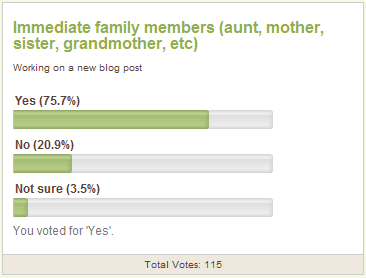
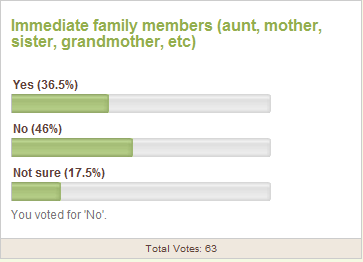
    It's widly "known" that losses are not genetic. Doctors say there is no way that the trait can be passed down from either parent. Yet, when you ask the board if any of their immediate family members have had a loss, more say yes than no.


    Interestingly, though, more say no than yes when it comes to infertility (secondary or initially) with a good chunk unsure.


    The top Google searches when you type in "Are miscarriages...." pops up with genetic and hereditary. That's not a coincidence.


    Once you've had a loss, you know how much it's out there, like a new world has been exposed. But why does it seem to pop up a lot in your own family?

    Searching online and talking to doctors seem to bring up nothing. They'll say it's a fluke, a genetic abnormality (of your LO, not you) or that it's just a coincidence. There seem to have been no true studies into why they seem prevalent in families.

    Perhaps one day,family losses will be a factor into your monitoring during your own pregnancy. Maybe it will help to boost your check-ins or ultrasounds or even just your betas.

    Until then, we'll keep on keepin on.

    Interesting articles to read:

    Way Of Predicting Outcome Of Pregnancies With Miscarriage Threat Developed

    Are Miscarriages Hereditary? A question on AllExperts.com

    Multiple Miscarriages Linked To Gene- from 2001

    Polycystic Ovary Syndrome- PCOS

    First off. What is PCOS?
    Polycystic ovary syndrome is a condition in which there is an imbalance of a woman's female sex hormones. This hormone imbalance may cause changes in the menstrual cycle, skin changes, small cysts in the ovaries, trouble getting pregnant, and other problems.

    PCOS is one of the most common causes of fertility issues in women, but it's rarely addressed publicly and can be, at times, hard to diagnose. Starting as young as 13 or 14 and ranging up to menopause, PCOS can affect any woman and with a variety of symptoms.

    Symptoms of PCOS can be mild, moderate or severe. They can also be a 'coctail' of any that are listed below:

    Changes in the menstrual cycle:
    Absent periods, usually with a history of having one or more normal menstrual periods during puberty (secondary amenorrhea)
    Irregular menstrual periods, which may be more or less frequent, and may range from very light to very heavy

    Development of male sex characteristics (virilization):
    Decreased breast size
    Deepening of the voice
    Enlargement of the clitoris
    Increased body hair on the chest, abdomen, and face, as well as around the nipples (called hirsutism)
    Thinning of the hair on the head, called male-pattern baldness

    Other skin changes:
    Acne that gets worse
    Dark or thick skin markings and creases around the armpits, groin, neck, and breasts due to insulin sensitivity

    Some women may only exhibit irregular periods or some women may have irregular periods, increased hair, insulin resistance, elevated testosterone, etc. all at once.

    When you sit down with your Dr, OB or Endochronologist, and list out your symptoms, be they many or one, you may be given a round of testing. These tests will determine your insulin, how it's processed, your testosterone, estrogen and thyroid. There are other tests that may be run, but the previous listed are the most common. Other tests may include:
    Estrogen levels
    FSH levels
    LH levels
    17-ketosteroids
    Lipid levels
    Pregnancy test (serum HCG)
    Prolactin levels
    Vaginal ultrasound to look at the ovaries
    Pelvic laparoscopy to look more closely at, and possibly biopsy the ovaries


    Once a diagnosis is confirmed, treatment may begin. As varying of the symptoms, so are the treatments. Some may only need a diet and weight modification. Others may need medications as well as diet and exercise adjustments. All will be an effort to balance hormones and increase ovulation regularity.

    Medications include:
    Birth control pills or progesterone
    Metformin or Clomid
    LH-releasing hormone (LHRH) analogs

    Only you and your doctor can determine what the best course of action is. If you are ever uncomfortable with a diagnosis or treatment, seek a second opinion. Learning from others with the same experience can also be beneficial. There are two fantastic groups called SoulCysters and PCOSSupport that can help connect you with others, give you information and help guide you through this confusing time.

    Never be afraid to ask a question or ask for help. PCOS can be confusing and scary at times. Follow directions and try to stick to a healthy diet and exercise routine.

    Additional information:
    Medical publication- http://www.ncbi.nlm.nih.gov/pubmedhealth/PMH0001408/
    WebMD Overview- http://women.webmd.com/tc/polycystic-ovary-syndrome-pcos-topic-overview
    Medications- http://www.newsmax.com/FastFeatures/Polycystic-Ovary-Syndrome-drugs/2011/03/09/id/370670

    Infertility- Testing, questions and information


    There's a wide range that will "qualify" someone to be considered infertile. For a man, it could be low sperm count, no sperm release, or sperm that are physically incapable of going into the egg on their own. For a women, the list seems to be greater. The range is generally seen as:
    You are in your mid-30s or older, have not used birth control for 6 months, and have not been able to become pregnant.
    You are in your 20s or early 30s, have not used birth control for a year or more, and have not been able to become pregnant.


    How will we be tested?
    As a general start-out, both partners are given a general overview. This includes:
    Medical History
    Physical Exam
    Blood and Urine Tests- (LH, prolactin, Progesterone, thyroid, testosterone, and STD's)

    There are certain tests specific to each partner that maybe done. Women may be asked to do a postcoital test (checking cervical mucous) and a home LH test. Men may be asked for a semen analysis to check the amount and "capabilities" of his sperm.

    Should all the tests not give definite answers a second level of tests could be performed. A general antibody test and karyotyping will be done for both partners. For women a pelvic ultrasound, Hysterosalpingography (HSG), Sonohysterography (SHG), endometrial biopsy and laparoscopy may be performed. For men and ultrasound and/or testicular biopsy may be performed.

    It's been studied that for 80% of couples, the cause is either a sperm problem, irregular or no ovulation, or blockage in fallopian tubes. For about 15% of the diagnosed 'infertile' couples, there may be no answers resulting in a diagnosis of unexplained infertility.

    The most common causes of infertility have been found to be
    Men:
    Impaired function of sperm
    Impaired delivery of sperm
    General health and lifestyle
    Environmental exposure

    Women:
    Fallopian tube damage or blockage
    Endometriosis
    Ovulation Disorders
    Elevated Prolactin
    Polycystic Ovary Syndrome (PCOS)
    Early Menopause
    Uterine Fibroids
    Pelvic Adhesions

    There are a variety of treatments can be done to help with any diagnosed explanation of infertility.

    For men, the solution may be as simple as medication, increased frequency of intercourse or aid in unblocking tubes allowing adequate semen release.

    For women, there is a large list of aids:
    Clomiphene (Clomid, Serophene)
    Human Menopausal Gondrotriphin or hMG (Repronex)
    Follicle Stimulating Hormone or FSH (Gonal-F, Bravelle)
    Human Chorionic Gonadotripin (Ovidrel, Pregnyl)
    Gonadotropin Releasing Hormone
    Aromatse Inhibitors
    Metformin (Glucophage)
    Bromoctrptine (Parlodel)
    Assisted Reproductive Technology (IUI, IVF, ICSI)

    As with any medical treatment, there can be complications. With fertility medications, the result may be multiple pregnancy, overstimulated ovaries, bleeding or infection, low birth weight, or birth defects.

    As with any medical advice, you should only listen to your doctor. They will know the best test, treatment and level of risk for each procedure or aid you may be prescribed.

    Additional links and information:

    (overview of tests)http://www.webmd.com/infertility-and-reproduction/tc/infertility-tests-overview

    (breakdown of tests)http://www.webmd.com/infertility-and-reproduction/guide/infertility-reproduction-diagnosis-tests

    (Understanding Infertility) http://www.webmd.com/infertility-and-reproduction/guide/understanding-infertility-treatment

    (infertility ‘causes’) http://www.mayoclinic.com/health/infertility/DS00310/DSECTION=causes

    (Discussing infertility with a dr) http://www.mayoclinic.com/health/infertility/DS00310/DSECTION=preparing-for-your-appointment

    (Treatments and drugs) http://www.mayoclinic.com/health/infertility/DS00310/DSECTION=treatments-and-drugs

    (Recent news and updates about infertility) http://www.webmd.com/infertility-and-reproduction/news-features

    Feel free to join the discussion on The Board if you have any questions or input or put a comment down below!

    RPL- Testing and General Information

    What is RPL?

    RPL means Repeat/Recurrant Pregnancy Loss. Generally when a woman has had two or more losses confirmed by an OB, they are sent for RPL testing. Many doctors have varying views on when a woman should receive RPL testing. Some may say after “x” many weeks, three losses, or even after a certain age and a certain number of losses. Only your doctor will have the correct answer for you and your situation. If you ever question your doctors decision, it is best to seek a second, professional, opinion.
    What will they test for?

    Genetic testing

    Studies have concluded that about half of all first trimester miscarriages are the result of chromosomal abnormalities. These generally occur on a sporadic basis, meaning that they are random occurrences. They are, however, related to the age of the woman and are more likely to occur with advancing maternal age.

    Research suggests that after a couple has had 2 or more unexplained miscarriages, there is a 2-5% risk that one member of the couple is a carrier of a balanced chromosome rearrangement. Chromosomal analysis of the products of conception (the miscarried fetal tissue) and of the woman and her partner may provide additional important information that will affect future reproductive decisions and additional testing recommendations.

    Hormonal testing

    There are several hormonal imbalances that can contribute to miscarriage rates. These can be evaluated with simple blood tests and treated if present. The recommended hormonal testing will depend up on the symptoms experienced, but may include thyroid, prolactin, follicle stimulating hormone, fasting glucose and insulin levels.

    Hematologic and Immunologic Testing

    Several blood disorders have been implicated in recurrent miscarriages. Women with abnormal blood clotting may be predisposed to early or late miscarriage and women with high risk personal or family histories should be tested. Women with these disorders have a high success rate when properly treated. Testing and treatment of low risk patients continues to be debated among physicians, however even in these cases, the most common abnormalities should be ruled out.

    Uterine Abnormalities.

    Distortion of the uterine cavity may be found in approximately 10% to 15% of women with recurrent pregnancy losses.

    There are some great online resources to finding out how much testing will cost, a breakdown of each area of testing and what they all mean. Once you get tested and talk to your doctor, you can then move forward. Never start your own treatment based on what is found online. Only your doctor will know the best way to treat you and help you achieve a healthy pregnancy.

    (RPL information)http://www.stanfordivf.com/recurrent-pregnancy-loss.html

    (RPL Overview) http://emedicine.medscape.com/article/260495-overview

    (Should you ask for Genetic Testing?) https://www.dnadirect.com/web/article/testing-for-genetic-disorders/recurrent-pregnancy-loss/50/who-should-consider-testing

    (Information on testing cost and breakdown) http://www.fertilityplus.org/faq/miscarriage/rpl.html

    Check back for information on Infertility information and testing information and some of the common factors into fertility difficulties.

    Feel free to add any questions or comments in the comments section below or in this thread on TTCAL- RPL Blog Post- Link and Discussion/Questions

    Dad's weight can affect fertility?

    Among couples using assisted reproductive technology, an overweight male partner may lower the chances of pregnancy, a retrospective study showed.

    Read more here! 

    Blood type can affect fertility?

    Have you seen this new study? They are saying that women with the blood type O, which is the most common and almost half the population has, have fewer eggs and the eggs they have are lower quality. Blood type A has the best eggs (fat lot of good that did me!).  The study used FSH levels to determine this. FSH hormone levels increase in women with fewer eggs, as the hormone encourages egg production. This is one reason why older women have a higher chance for twins, as high FSH levels mean that more than one egg can be released.  Women with blood type O had higher FSH levels than normal for their age group.

    You can read more about this study here.

    What to think? Obviously more research needs to be done. But if you have blood type O, you may want to look into getting your FSH levels checked!

    Infertility Blogs

    I recently found an interesting site on fertility called Fertility Authority. It's chock full of interesting articles, blogs, and information. Here are a few blogs that I picked out as being especially interesting:

    The Fertility Doc: Dr. Kreiner
    Recent posts include acupuncture, donor eggs/sperm, PCOS and stress and infertility.

    Eating to Conceive: The Fertile Kitchen
    Recent posts include top three fertility foods, eating meat, sticking to a fertility diet, and eating to improve the uterine lining.

    Fertile View: Dr. Joseph Hill
    Recent posts include genetic causes of recurrent miscarriage, thrombophilia and recurrent miscarriage, infertility evaluations, environmental and lifestyle factors linked to loss, immunilogic causes of recurrent miscarriage, and tons of other information on recurrent miscarriage.

    The Fertile Future: Dr. Levens
    Recent posts include lifestyle tips for couples with infertility, nutritional supplements and fertility, and PCOS and miscarriage.

    Hopefully you'll find some of this interesting and helpful!

    Advances in IVF

    Thanks Kira98 for posting this article on the TTCAL board!